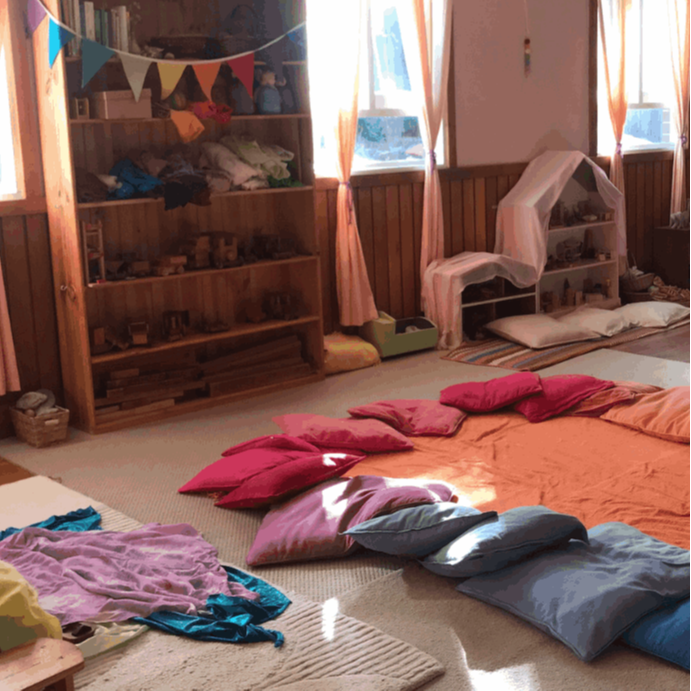
Rainbow Gardens Playgroup
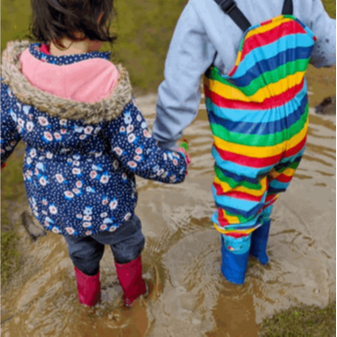
Tamar Valley Child Care
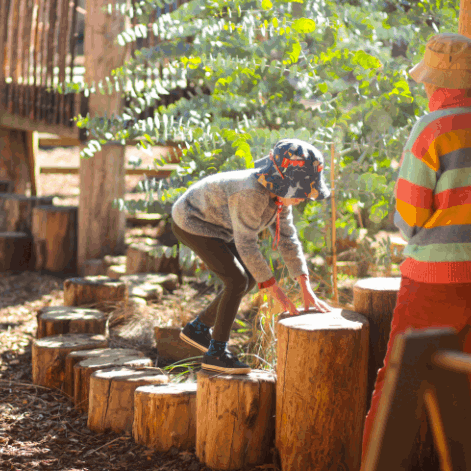
Kinder - Prep
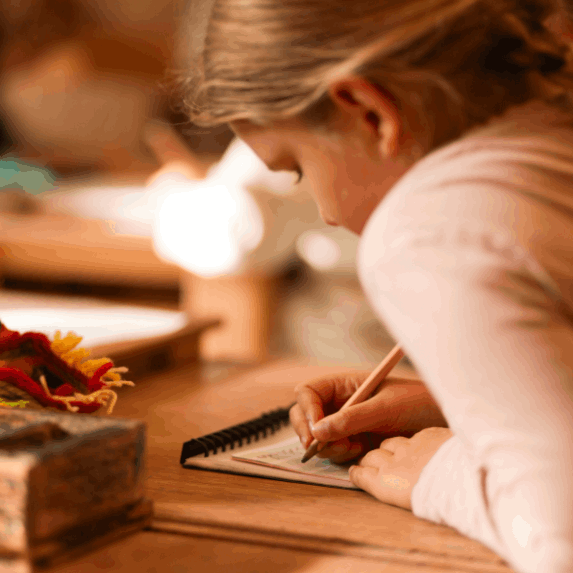
The traditional learning sequence within Steiner schools is in three parts :
1. Academic learning during the morning Main Lesson
2. A practice or artistic lesson in the middle period of the day, which includes music, languages, art and drama
3. Craft and practical activities in the afternoon which may include handwork, gardening or games.
The threefold aspects of thinking, feeling and doing, or in other words learning with head (cognitive), heart (creative) and hands (practical) are nurtured in equal measure.
The two-hour Main Lesson block focusses on an academic theme such as maths, humanities or science, however the class teacher integrates storytelling, drama, rhythmic movement, visual arts, music, practical activity and formal academic work to progressively explore the central theme, and engage whole-hearted participation.
Each Main Lesson theme usually lasts 3-4 weeks, which allows children to explore issues in depth and from many different angles. The Main Lesson relates to the students’ stage of development and is linked to other subjects, building upon prior knowledge, experience and skills in creative ways that engage students in their learning.
Students create their own Main Lesson books, which will be a reflection of what they have learned presented in words, pictures, charts, and diagrams.
Steiner Education is a broad curriculum that encompasses traditional academic learning such as numeracy and literacy, along with encompassing many additional learning areas that may not ordinarily be part of a primary school curriculum. The purpose of this is to give substance to educating the whole child, head, heart and hands.
The broad range of learning areas includes:
- Literacy
- Numeracy
- History
- Bush School
- Arts
- Crafts such as modelling, knitting, weaving and woodwork
- Music and Recorder
- Indonesian
- Health and PE
- Geography
- Gardening and Botany
- Cooking
- Drama
- Form drawing
- Eurythmy (a form of movement which is unique to Steiner schools)
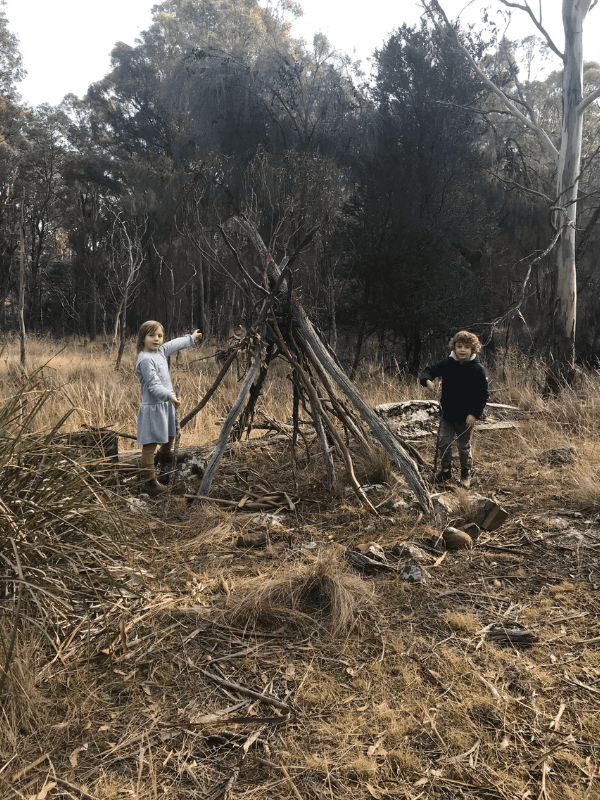
Bush School and an immersive outdoor program connects children to nature.
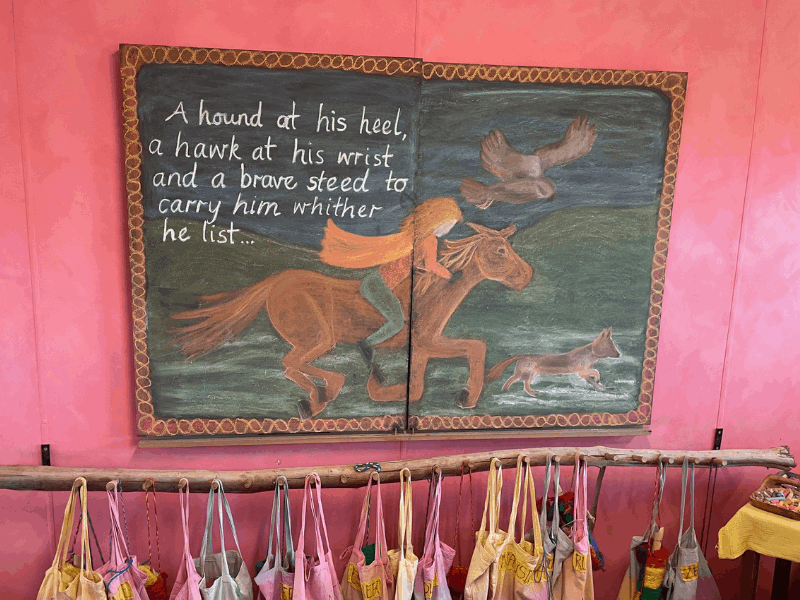
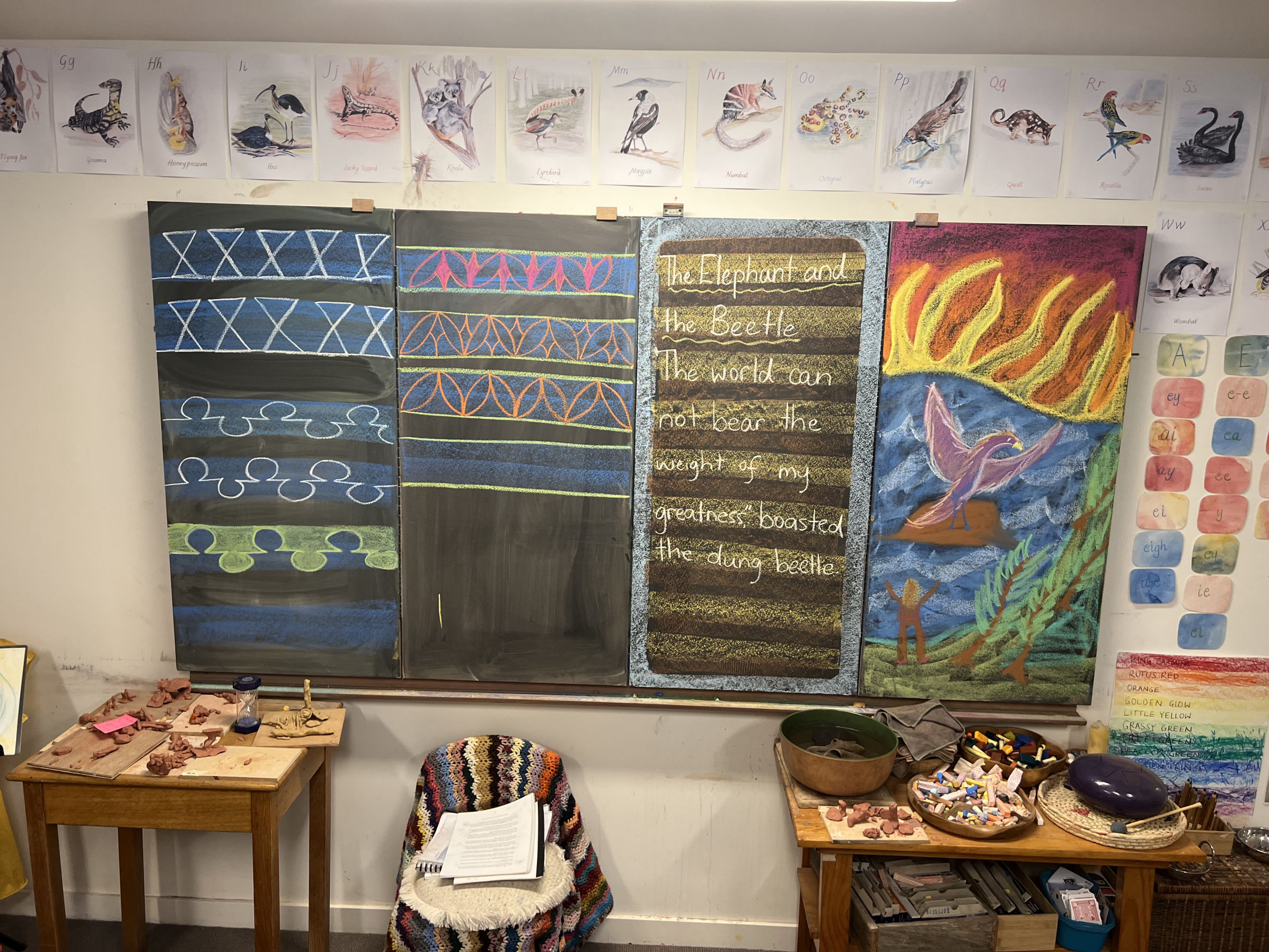
Captivating main lesson stories immerse children in learning
The children engage deeply with each letter, beginning with consonants and moving to vowels. They are introduced to each letter with a picture where the letter is integrated with a key element of the story. The story etches the letter into their hearts and minds:
They also model the letter out of clay, make the letters with their bodies, paint the letters, use chalk on the ground and on chalk boards to be creative with the letters, use sand trays to make the letters then erase and repeat without fear of ‘getting it wrong'
Arithmetic is taught through movement — walking and stamping, clapping, throwing a beanbag –- and through lively oral games. Class 1's are introduced to Roman and Arabic numerals and learn to count by ones, twos, threes, fours, fives, and tens. Counting is often done through clapping games as a group to keep everyone on track.
The four processes are taught through imaginative stories with characters or ‘maths gnomes’ who:
- Are always finding more things and putting them together (adding)
- Constantly giving things away (subtraction)
- Personify abundance and can quickly produce more (multiplying)
- Is good at organising and can make sure everyone gets their share (dividing)
World stories through the year levels lead children through an enriching understanding of the world and its peoples and their place within that. The stories told are all collective stories that have been created and held and passed down through generations of people with seeds of truth (as opposed to a specific rendering of history by one culture or another or one particular author).
In Class 1, it begins with the Dreaming stories, Class 2 is understanding Saints and Fables, Class 3 is the Christian creation stories and stories of leadership, Class 4 is Myths of Northern Europe (Norse Myths), Class 5 is the Ancient cultures - India, Persia, Babylon, Greece, and in Class 6 the stories move from mythology to recorded texts through the history of Ancient Rome.
In Class 4 we develop the concept of time. We start with a day in the 24 hour sense and observe that there is daylight and night. Then the week; we string seven days together and learn the names of the days of the week and what they mean. Then the cycle of the moon across the weeks and the sense of months. Then the seasons as they cycle through the year and the sense of a full-circle in the year.
Then we introduce measurement – this can be done with a story of a candlemaker who puts marks on their candles to understand how much time has passed. By that point the children will bring the subject of time up themselves and the teacher is ready to introduce our way of measuring time, the calendar and the clock.
If you have any questions or would like to arrange a school tour, please complete the Expression of Interest form below or contact the School Office on enrolments@tamarvalleysteiner.tas.edu.au or 03 6711 3238.

Website Software